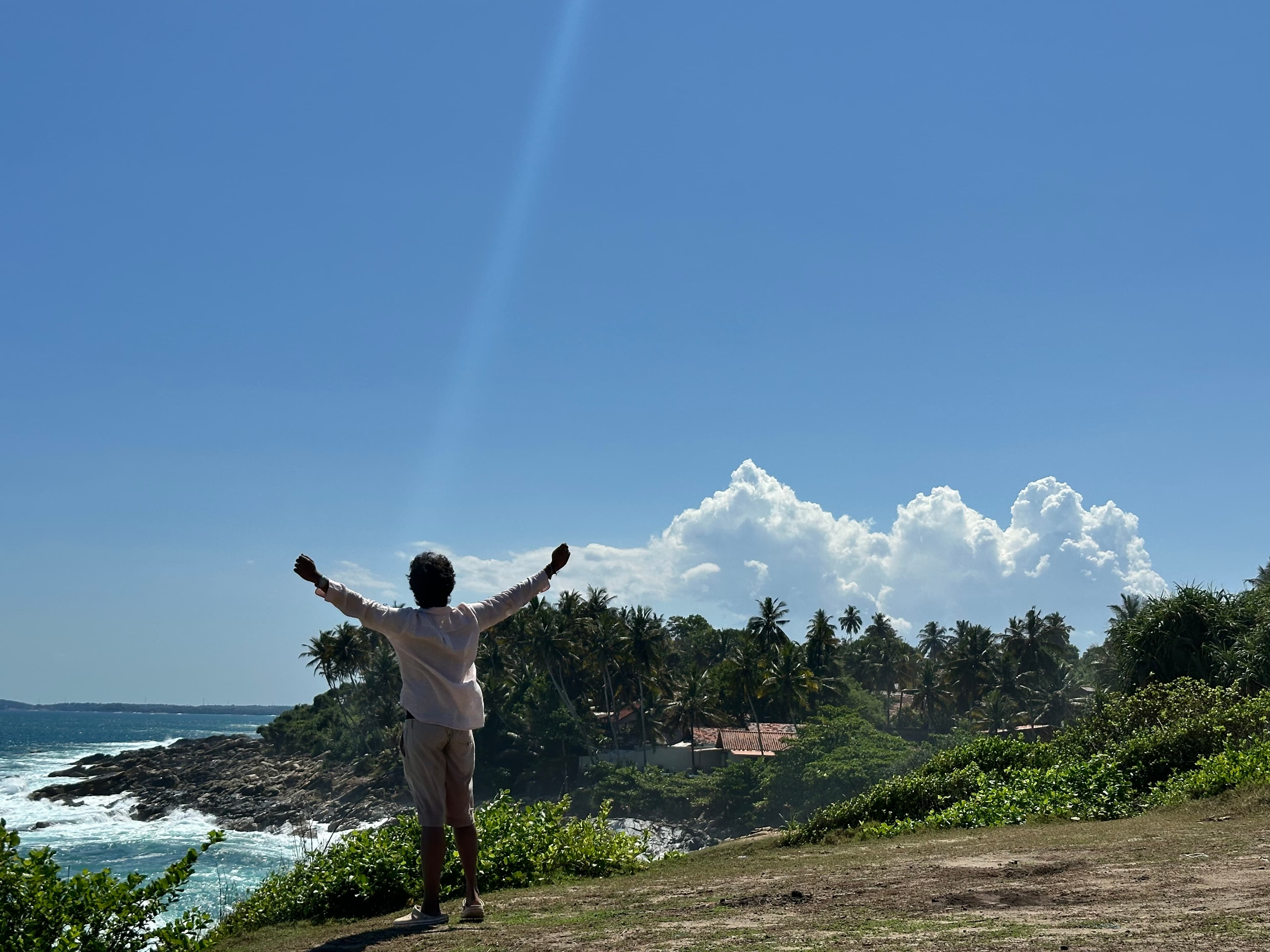
It started less like a plan and more like an exit. A few days off, a flight that wasn’t too painful, and the vague idea that Sri Lanka would be close enough to feel easy but different enough to feel like a break. No group chats, no coordination — just me, a backpack, and a loose route I’d half-researched the night before.
By the time I landed in the afternoon, the humidity hit first. Then the stillness. And somewhere between the airport and the coast, the trip stopped being about “places to cover” and started becoming about how slowly I could take things.
Day 1Landing, skipping Colombo, and slowing down in Negombo
I landed in Colombo around early afternoon and didn’t stay there — deliberately.
Most people I spoke to before the trip said the same thing: if you’re here for beaches and a slower pace, don’t spend your first night in the city. Head to Negombo instead. It’s closer to the airport, quieter, and easier to settle into.
I checked into Jetwing Sea, a beachfront property that feels designed for exactly this — arriving tired and doing nothing. The ocean was right there, the kind of grey-blue that looks calm but never really is. Not dramatic, not postcard-perfect, just steady.

Negombo itself isn’t a place you “explore.” It’s a pause. A transition. A place where you walk to a café at night, eat something decent, and go back early without feeling like you’re missing out.


If you’re staying here, one place worth checking out is Jude Restaurant — specifically the upstairs seating. It’s simple, slightly tucked away, but known for fresh seafood and generous portions. Nothing overly styled, just well-cooked Sri Lankan food, cold beer, and a relaxed balcony vibe that works perfectly after a travel day.
If you’re tight on time, you can skip it entirely and head straight south. But as a first night buffer, it did its job.
Day 2The long way to Hiriketiya (and why it’s worth it)

The next day was less about destination and more about getting there.
From Negombo, I made my way to Colombo’s bus station and took a private AC bus to Matara. This is the key node if you’re relying on public transport — everything on the south coast branches out from here.
There are faster ways to do this:
- Train (but needs advance booking and timing discipline)
- Direct cab (₹8–10k equivalent)
But the bus worked. It was slower, slightly chaotic, but functional.
From Matara, I booked a tuk-tuk via PickMe and reached Hiriketiya — a small bay that feels like it’s been designed accidentally perfectly. Curved shoreline, soft waves, and just enough cafés to keep things interesting without overwhelming it.


I stayed at The Green Station, tucked just off the beach road. It’s one of those places where the architecture feels intentional — open spaces, greenery, quiet corners. Close enough to walk everywhere, far enough to not hear everything.
After exploring the near by area, I got back to BnB pretty late around 12:30 a.m. — tired, slightly disoriented, and just ready to crash.
And then I locked myself out of my room.
Not just stepped out. Fully locked out. Phone, wallet, passport — everything inside.
I went out to the common area to fill water, the door clicked shut behind me, and that was it.
The caretaker? Fast asleep. No response. No backup plan.
At that point, the only option left was to knock on the adjacent room. Which is how, at around 1 a.m., I ended up apologetically explaining my situation to a very confused but surprisingly kind Belgian couple.
They didn’t just listen — they helped.
We tried calling the host. No luck. Then someone suggested what felt like a very reasonable idea at the time: what if we just climb in through the bathroom window?
So there we were — three people, in the middle of the night, on a shared balcony, attempting a low-effort break-in into my own room.
We got to the window.
Only to realize… the bathroom door inside was also locked.
At this point, it had gone from inconvenient to slightly ridiculous.
The final plan was less of a plan and more of “let’s just try things.” Some improvisation, some trial-and-error with the lock, and eventually — somehow — the door gave in.
We got in.
No damage. No drama. Just three slightly relieved people standing in a room that should’ve been accessible in the first place.
I still owe them a beer.
Day 3Surfing, Blue Beach, and a rhythm that makes sense


Mornings in Hiriketiya start early, whether you plan them or not.
Surf lessons begin just after sunrise. I signed up without overthinking it — and that helped. It’s beginner-friendly, the waves are forgiving, and the whole setup feels more relaxed than structured. You fall, you try again, you eventually stand for a few seconds, and that’s enough.
After breakfast and a slow lunch, I rented a scooter and headed to what people casually call Blue Beach — about five minutes away.

It’s one of those places that doesn’t photograph the way it feels. A narrow strip of sand connecting land on both sides, water stretching out in two directions. Not crowded, not commercial. Just open.
Back in Hiriketiya by evening, the pattern continued — shower, walk, pick a café.
Cosco stood out. Not because it’s “famous,” but because it’s precise — good drinks, well-made sushi, and a menu that feels thought through rather than expanded for tourists.
You can also end your day at Dots, which turns into a social spot by evening. Not loud, not quiet — somewhere in between.
Day 4Beaches that don’t need your time, and Mirissa that does

I spent the first half of the day exploring nearby beaches — Dikwella and Batheegama.
They’re fine. Clean, quiet, and largely empty. But that’s also the problem — there’s not much to do. You go, you look around, you leave.
By late afternoon, I headed to Mirissa, about an hour away.
The energy shifts immediately. More people, more movement, more options. The beach turns into a row of restaurants by evening, each displaying the day’s catch — you pick your fish, they grill it, you sit down by the sand and eat.
If you get there before sunset, The Lava Restaurant is worth stopping by. It’s known for its lights and setup, but what actually matters is timing — catching that transition from daylight to evening.


Mirissa feels less like a place to stay and more like a place to visit. Come for the evening, stay for dinner, leave before it gets too loud.
Day 5Back to Colombo, A swim, A hatred for Sea Urchin's and with a detour I didn’t plan for


Colombo at the end of the trip makes more sense than at the start.
But getting there wasn’t as smooth as I’d imagined.
I started the morning with an early swim at Hiriketiya , the kind of quiet, almost empty beach moment that makes you slow down without trying. That bay had grown on me more than I expected. Small, walkable, predictable in the best way. Easily the part of the trip I felt most attached to.
And then, somewhere between enjoying it and not paying enough attention, I stepped on a sea urchin.
That changed the tone of the day quickly.
What was supposed to be a relaxed checkout turned into a hospital visit. Luckily, there’s a solid private setup nearby in Dickwella, and I got it checked without much hassle. Still, it delayed everything — packing, leaving, the bus.
By the time I finally started toward Colombo via Matara, the journey felt longer than it actually was. Not because of the route, but because every step reminded me of it.
I reached Colombo later than planned.
And at that point, the city did what it’s good at — being functional. I stayed along the main stretch where most of the big hotels are — Shangri-La, ITC Ratnadipa (formerly ITC Grand Central), Ramada, Hyatt Regency — all lined up facing the sea.
You don’t need to stay in one to use the area. Walk along the promenade, step into a café, order something simple.
What helped more than anything, though, was a long bathtub soak back at the hotel. Not dramatic, not life-changing — just enough to reset the day after everything went slightly off track.
Colombo isn’t chaotic. It’s just not built for the kind of trip I was on. But as a final stop before a flight, it works.
Day 6Back to Bangalore, and back to being available on Slack

There’s always a Day 6. The one no one really writes about.
No beaches, no cafés, no “one last sunset.” Just an early checkout, a slightly annoying airport run, and the quiet realization that the trip is over.
Colombo airport felt efficient in a way I didn’t fully appreciate. No chaos, no rush — just a clean exit from a place that had, over a few days, slowed everything down.
And then, a couple of hours later, Bangalore.
Same traffic. Same notifications. Same “just circling back on this” messages waiting patiently. The contrast isn’t dramatic — it’s subtle, which somehow makes it worse.
You go from deciding between a surf lesson or doing nothing… to deciding which email sounds less urgent.
I missed Hiriketiya almost immediately. The kind of place where time stretches just enough for you to notice it. Where the hardest decision was which café to sit at, not which meeting to join.
And just like that, you’re back.
Laptop open. Calendar full.
Mentally still somewhere between a beach walk and a badly timed step on a sea urchin.
One last practical thing — if you’re heading out with leftover LKR, you can get it exchanged at the airport itself. Not the best rates, but good enough to not carry it back home and forget about it.
What I’d do differently
- Skip Negombo if short on time. It’s a soft landing, but not essential.
- Book trains in advance if you want that route. They fill up quickly, especially scenic ones.
- Stay longer in Hiriketiya. 2–3 nights minimum — it grows on you slowly.
- Don’t over-plan beach hopping. Many beaches look similar; pick fewer, stay longer.
- Time Mirissa for sunset. It’s the only moment where it really stands out.
Would I go back?
Not immediately. And that’s a good sign.
Sri Lanka feels like a place you don’t try to “complete.” You just pass through a version of it. This one — buses, small beaches, solo meals, and unplanned evenings — worked for me.
Next time would be different. Maybe trains, maybe the hill country, maybe with people.
But this version didn’t need fixing.